Wednesday, January 29, 2020

Memories of Young Kobe: Of Black Nerds and Young Guns

I’m not putting my Kobe disclaimer at the bottom: I’ll put it at the front. Members of society have every right not to forgive Kobe for what he did in Colorado in 2003. I’m a Christian and forgiveness is one of my highest core values. But a society that consistently pushes its members to forgive the rich and famous for their crimes against the least of us is hellish. I respect your right not to absolve him. But I also need to tell you why Young Kobe had such meaning for me, why he's featured in a surprising number of tags in my old blogs.


The funny thing is, I hated the Lakers. I hated all the teams that were seen as famous and rich, benefiting from being hosted in a large city like New York or Los Angeles. I literally refused to like Jordan for his entire career because I was a diehard Cleveland fan, but also because I recognized how the media aided and abetted his legend. But I was fascinated by Kobe going to the NBA straight from high school. And the more I followed his career, the more I started to see ways that he was not properly understood, even ways that I sympathized.

But first, a little time travel trip. In 2020, there are plenty of young successful people in the limelight. Billie Eilish just won a ton of Grammys. We believe that almost any talent can be discovered from Youtube or TikTok. Some of our most popular apps were started by teens and people in their early 20′s. In 2020, we have nerds everywhere, of every color and gender and type.

In 2000-2003 or so? Our president, George W Bush, based much of his campaign around the idea that older, wiser members of his cabinet were going to do much of the thinking for him, despite being 54 (yes, that old!) when elected. The prevailing wisdom in the business community was that if a young entrepreneur had a good business idea, his/her company should be run by an older, wiser CEO. There were so few younger people being showcased with talent or authority. Even look at the music charts for 2001: they’re fairly dominated by older artists and groups. So it’s 2001 or so, and I’m in college and then grad school. It’s after the Dot-Com explosion, where all those Internet companies went bankrupt or were a shell of their former selves. Nerdy or young role models are few and far between.

First and foremost, Kobe was a nerd. He was poor at the social graces, poor at bonding with his teammates, and bad at small talk. Kobe was obsessed with basketball and languages and arts, in classic male nerd form. But because society was too RACIST (I’m sorry, this still bothers me), hardly anyone recognized this or said this out. At best they thought it was because he lived in Europe for so many years, lol. “He’s not nerdy, he’s Euro!” is pretty sad, isn't it? Yet much of the coverage of Kobe was completely blind to Kobe's true personality, and kept talking about how mysterious and unique he was. It's maddening in retrospect.


You all may not remember, pre-Obama, most of society was too small-minded to realize that black men could be nerds, unless they wore glasses and talked like Steve Urkel (smh). Don't trust me about it, listen to Donald Glover tell it like it is. Honestly, I’m not even sure I properly called Kobe a nerd, but I was drawn to his obsession with things over people.

Secondly, Kobe was a young talent who was constantly being squashed by the older talents in his life. Phil Jackson constantly criticized Kobe, sometimes deservedly, sometimes because Phil intentionally liked to bully the second or third best players on the team as some sort of fake psychological motivational tactic. Quick reminder of that is Phil yelling at Pau and hitting him in the chest here: I'm not saying it's wrong, I am saying it's Phil's M.O.


Shaq worked half as much as Kobe and then continued to demand the ball and the credit for Lakers successes. And the national media mostly sided with Phil and Shaq! Kobe was seen as the greedy young talent who wasn’t willing to wait his turn.

And I know! In 2020 this sounds ridiculous. In 2020, perhaps we should be stopping some young talents rather than encouraging them. But as a graduate student, as I started my career, I constantly ran into this from well-meaning older talents. Stop trying to do this: stop trying to do that. Just keep your head down. And I was too nice to talk back, but my support of Young Kobe was one quiet way I fought back, the way I resented how older talent was constantly stifling younger skill.

I didn’t have as much use for Kobe once he made it and Shaq left his side. I no longer felt as linked, and towards the end of his career Kobe started feeling like a joke I wasn't getting. The Black Mamba self-labeling was tone-deaf. His emphasis on salvation through hard work was hardly revelatory. But look, Young Kobe was someone who I could relate to, oddly enough, at a time where there were few nerds or innovators that I could appreciate. And if a nerdy white guy from the Midwest could connect with Kobe, no wonder his passing meant so much to so many.

I won’t forget it, and I’m moved by his passing. And I’d like to think that Older Kobe, at a certain moment, was becoming a better man, was finally becoming a more well-rounded man, aware of his faults. And that he could have been a role model for me and others again, on how to change and grow from your origins. But unfortunately that part of the Kobe story has ended, and we mourn not only the present but also the potential future that was lost.

Monday, January 27, 2020

A Silly Unveiling of a Childish Alter-Ego

For some reason, after Deadspin passed away, I feel guilty about my tiny Kinja alter-ego. It was a little project called Coming From Inside the House. It was basically to test how much Kinja would be willing to allow trolling of their own system, if blogs written to criticize Deadspin and Gawker would be permitted. The blogs from that playground are here: or I think this link will also work.

Wednesday, May 7, 2014

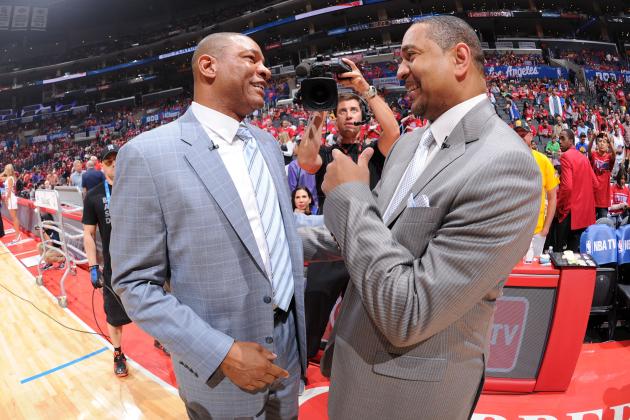
PSYOPBall, Not Basketball: Mark Jackson and Doc Rivers

After an exhausting seven-game Clippers-Warriors series, the focus has shifted to the next round for the Clippers and to the firing of Mark Jackson. But before we move on, can we talk about how crazy and extensive the psychological operations of both coaches were?

Pre-series:
During the regular season, the Clippers-Warriors rivalry was well-known. Doc forbid his players to join Warriors players for chapel. Mark Jackson was so into the Clippers rivalry that he trash-talked Doc before a Cleveland Cavs game in March, of all things:
-Q: How do things change with Klay out?

-JACKSON: Obviously Klay’s ability to shoot the basketball; probably as important if not more important, his ability to defend. In a game like tonight he would start naturally on Kyrie Irving.

Contrary to Doc Rivers’ comments, it’s not because I’m hiding Steph Curry. It’s just a smart thing to do as a coach. Take that, Doc. (Smiles.)

-Q: What did Doc say?

-JACKSON: He said he doesn’t hide Chris Paul. So nice subliminal shot.

Both Doc and Mark willingly gave each other bulletin board material before the series even started. They went after potential weak links like Redick and Thompson, already trying to sow some doubt in the minds of shooters.

Race:
Mark Jackson called for Clippers fans to boycott pivotal Game 5 to protest Sterling. Of course, such a move favors the Warriors in that pivotal matchup. What you may not have known was just how strong Jackson's comments were:
“If it was me, I wouldn't come to the game. I believe as fans, the loudest statement they could make as far as fans is to not show up to the game,” Jackson said. “As an African-American man that's a fan of the game of basketball and knows its history and knows what's right and what's wrong, I would not come to the game tomorrow, whether I was a Clipper fan or a Warrior fan.”
Tying in the boycott to being black, to what's right and wrong? No, Mark Jackson never said Clippers players should boycott Game 5. But can't you see hints of that idea in his comments and word choices? It's a wonderful bit of psychology. In addition, by the Warriors claimed they were ready to boycott the game had Sterling not been suspended, again, the Warriors seem to be taking the high road while subtly increasing the pressure on the Clippers. Is it ethical? Not so sure. Is it psyops at a high level? Yes.

Religion:
Sam Amick wrote a fascinating story on religion and NBA coaches that I may spin into a separate article. But let's focus on how Rivers is so available during a supposed tight, busy playoff series to give Sam Amick quotes:
"If it's 75% (who believe one way), that's to me 25% that (don't)," Rivers said. "To me, if it's 95%, the 5% deserve the same treatment as everybody else. And I just think that's what we need to do. If it was church, then that's different. This is not church. This is our jobs. So our jobs come first, respect comes second, and I think that's the way it should be."

Jackson is, of course, the pastor of a church in the off-season. Rivers already banned his players from fraternizing with the Warriors in a religious context. We have Draymond Green, Warrior player, saying "because without (God) we are not who we are and we are not the team that we are and we all know that. We like to give him credit for what he's doing for this team." In the same article, what does Rivers do? He intentionally attacks the idea that the Warriors have any special favor from God. He says "I don't think there's any God cheering for one team over another. I know that." It's no accident Rivers is choosing these words. Again, is it ethical? Not so sure. Is it psy ops at a high level? Yes.

After-series:
So the series is over, and the two coaches are friendly again, right? Not so fast.
When Jackson gets fired, he brings up that it's ok that he doesn't live in the Bay Area during the offseason. Why?
"But Doc Rivers coached in Boston living in Orlando. The coaches that I played for lived other places."
Oh, and Doc is disappointed at Mark's firing, sure. But wait, how does he say it?
"Mark Jackson gets a team to multiple playoffs for the first time in a thousand years and gets fired."
Yeah, a thousand years, almost as long as it took Vinny Del Negro to take Clippers to back to back playoff appearances. Worry not, psyops fans. I'm pretty sure Doc Rivers will renew the rivalry with whoever the Golden State Warriors next coach is. And we'll be here to appreciate how slyly the psychology of each statement is used to demoralize the other team.


Tuesday, April 29, 2014

Donald Sterling, Racism, and Nuance

The Donald Sterling tape is a bit of a rarity in our culture. Finally, pure proof of the racism many of us suspected still exists in sports. And it's more dramatic partly because the NBA has the best track record among the major sports in being race-blind. It's almost sure to improve the way athletes are treated by their "owners," correct? So what's wrong?

"Back to the tape: It really does have all you could want from a bigotry case study. Perfect material for a race, class, and gender sociology seminar. So much so that it begins to feel not real. Not in the sense that you’re surprised someone could think this way — not even close. But more in the sense that this whole thing — from the racial revelations to the symbolism of the players’ uniform removal — starts giving off strong vibes of a Disney race movie." --Rembert Browne, Grantland.

It's almost too convenient, the scriptedness of it all. The coverage severely lacks nuance, with a few notable exceptions (I highly recommend the Kareem Abdul-Jabbar article in Time as well, and Mark Cuban's comments on the possible ramifications of a thought witch hunt). Problematically, what worries me is that the very act of seeking nuance to this story is seen as suspect. Bryan Curtis hints at this in on Grantland:

A certain opinion — and I’d argue that this is, in nearly every case, an opinion that falls on the lefty side of the political spectrum — is articulated. It surfs Twitter. The opinion builds momentum until it becomes, with a few noisy exceptions, the de facto take of the entire sportswriter intelligentsia (perhaps the wrong word). That opinion then becomes something like a movement.

Sports blogs have come a long way. I recall the bad old days, where any act of a minority athlete that seemed "weird" was ripe for ridicule on a sports blog, with little room for nuance or cultural interpretation. High-five the blogger next to you, because they deserve it. Overall I'm pleased at how sports blogs have a more pro-labor, pro-individual understanding of sports than your typical columnist.

However, this has come at the cost of nuance in the sports blog community. The voices are more united, but they are more shrill. Alternative angles to a story are buried and shunned. Yes, your first article should be that Donald Sterling is a condemnable racist. But let's look at the other angles:

1) V. Stiviano fulfils every last stereotype of an opportunistic gold-digger. Her recordings, which may be as many as 100 hours worth of content, may not even be legal according to California law. She no doubt sold the recordings, and timed them for maximum impact. Relying on her tape as unbiased and clean testimony is hazardous. Sterling is not a first time offender and deserves much of this, but she also clearly targeted and exploited an elderly man. Abdul-Jabbar and Charles Pierce both brought this up, and deservedly so.

2) Mark Jackson tells Clippers fans to stay away, which sounds good!...until you realize it helps his team win pivotal Game 5 in LA. Magic Johnson deservedly hammers Sterling for telling Stiviano to stay away from Johnson in photos, good!...but Magic Johnson may have an ulterior motive in that this press could force Sterling to sell the team to Johnson at a lower price than face value. (For what it's worth, Magic denied interest in buying the team and also said he will not do more interviews on Sterling, which I give him credit for. But the rumors are floating.). I don't blame Mark and Magic for what they are doing, but it's important to point out the business of castigating racists can be rather lucrative. Doubt me? The LA NAACP would like a word. And finally...

3) There is a certain irony in organizations that have for years struggled to put a black face on camera or behind a computer piously criticizing a white man who employs blacks. Besides Grantland's wonderful Browne/Morris article, I struggle to think of a sports blog that has featured a black writer's take on this story. That's highly problematic. Donald Sterling is a racist...who hires black men. Sports blogs are not racist per se, but they have historically struggled to hire black writers. Thus such writers have been forced to start their own blogs to get noticed. (Full disclosure: I worked with DK Wilson at one such blog, just one example of this trend). I'll just gently and forcefully say that our whiteness is showing in coverage of this story. This is particularly true of those who are shouting at various black players, owners (Jordan), and workers to be "courageous" while offering little evidence of any personal courage in their linking, hiring, and publishing blog practices. Finally, sports blogs have mostly refrained from asking actual experts on race and business to weigh in. I understand that to some extent, such actions are more the Wall Street Journal or SI's domain. But there are definitely some voices out there that would talk to blogs, if we asked. (Popsspot has some interviews with experts on this, as an example).

I'm pleased that Sterling has been fully unmasked, but I worry about a blog culture in which asking any questions about the nuances of such stories is in itself suspect. No one wants to be seen as supporting a racist, I understand that. What worries me is that no one seems to want to be seen as thinking out loud on this topic, either.

Monday, September 23, 2013

Congratulations to Brynn Cameron, Balla and Lover Extraordinaire

Brynn Cameron was the former girlfriend of Matt Leinart, the USC quarterback in the middle 00's. They met in class, and bonded because they both had a goofy sense of humor. It didn't hurt that both are attractive people. They broke up, but not before having a baby together. The adorkable New York Times article about it all is here, and the photo below is also from the article.

Six years later, Brynn met another athletic young man. They went out for a while, and lo and behold, Brynn became pregnant again. No big deal, right? A single mother dating 6 years after her first child is hardly irresponsible! And the young man was 24. Surely he knew the basics about birth control, should he have been worried about pregnancy? There's no real story here. Or is there?


Because somehow, between TMZ and The Big Lead comment sections, you'd think Brynn Cameron is a con woman and witch. You'd think she was bewitching wealthy, athletic men, forcing them to have sex with her and stealing their sperm via her magicks just so she can collect child support forever and ever. Because obviously, Matt Leinart and Blake Griffin are sheltered, charmless individuals who had no other sexual options, right? Wrong.

Let's look over the complaints, one by one. First, the charge that Miss Cameron is somehow not attractive. I reply: Scoreboard! She landed two of the most attractive bachelors in LA. How can you claim she's not hot? She's tall, blonde, athletic, and apparently has a fun sense of humor. Many a woman has done just as much with less. Tall blondes might not be your thing, and there's nothing wrong with that, but why question another man's choice?

Second, the idea that Brynn Cameron somehow took advantage of the two men. In a creepy way, I kind of understand where some men are coming from in their complaint. We've all been "that guy" who instead of using common sense, pursued a woman just because she was hot. But since when is it the woman's fault for being attractive? Isn't it the man's fault for lacking self-control or not taking appropriate precautions? Sex is risky by its very nature, which is perhaps why it's so addicting, but I'll leave that logic to smarter folk than I.

Third, the idea that Brynn Cameron is some sort of "jersey chaser" who hunts down athletes. There were SEVEN years between Leinart and Griffin. For all we know, Brynn spent those years not dating at all, or dating polite accountants from San Diego who liked museums. But otherwise, fine, let's imagine the "worst"; Brynn only likes dating men her age with great bodies who have a lot of money. My unscientific survey estimation is that she shares that "fetish" with about...95% of womanity. She happens to have qualities that allow her to live that dream; congratulations to her for winning the genetic and personality lottery. Don't hate the game, right?

Fourth, some commenters have gone so far as to claim that Brynn must be some sort of sexual freak to land the two men. I would link to make my point, but I try to keep the language on here SFW. But...can't we also assume that Brynn has a good understanding of the mind of an athlete? That, being an athlete herself, having a brother who is an NFL player, and also being around athletic men, she knows what they like and how they act? Never underestimate the value of truly understanding a man's culture and mindset.

Finally, it's fair to point out that Brynn Cameron complained that Matt Leinart was not paying her enough in child support. He had wanted to pay her $72000 a year. Which sounds like a lot...until you realize that she was living in LA at the time. In, say, "Buffalo, New York" dollars, that's $50,000 a year. That's not that much, given Leinart's wealth, and that Brynn Cameron was a college graduate who now had to stay at home to look after a baby. Supposedly, Leinart then had to pay her $15000 a month. That's a lot, but it's also only fair to point out that Leinart's first contract was for about 8.5 million a year. According to my conservative calculations, Matt was paying 2.5% of his salary in child support. Most child-support paying dads would think themselves lucky to pay so little, percentage-wise.

Maybe one day the sports world will stop being so misogynistic to women, but that day is not today.

Friday, May 17, 2013

Michigan State Refuses to Educate Jay Harris

Jay Harris, a three-star recruit, supposedly has turned down a scholarship from Michigan State in order to pursue his rap career. By itself, it's rather irrelevant, much like the football player who opted for modeling over football. Rap can be a young man's game. Jay Harris may be making a very logical decision, for all we know, that his chances in rap right now are better than his chances at the NFL three or four years from now.

(photo via Lou Rabito of Philly.com)

But it's the response of Michigan State that most concerns me. Philly.com is reporting that Michigan State turned Jay Harris down once his explicit rap videos came to light. Perhaps it's Michigan State trying not to look like Harris dropped them. But perhaps it's MSU blackballing Harris for his videos. And that should truly concern those of us who care at all about the legitimacy of college sports.

College sports has always portrayed itself as the great educator of young men who otherwise would be trapped in some sort of urban maelstrom. Plenty of young athletes have used drugs or spoken harshly of everyone who isn't a heterosexual male. One wonders if MSU would be turning down Mr. Harris if instead he was a lacrosse player who uploaded Youtube vids of he and his friends being high and had hardcore porn on his Tumblr. Michigan State is showing that college sports isn't about education, it's about suppression. Slap your athletes around enough so that their harsher side is hidden. Teach them to keep the groupies behind closed doors and the drugs carried on non-athletes. That appears to be more the true mission of college sports.

Yes, I'm on a soapbox, but I'm more surprised that no one else is with me. To the best of my knowledge, Jay is only 18. Don't confuse this with the controversies of various pro athletes in their late 20's releasing rap albums. Michigan State did not employ Jay when he made the videos. It seems to me that MSU is refusing to educate Jay Harris, and that reflects more on MSU than on Jay.

Sunday, January 20, 2013

From Deadspin Comment Joke to Cold Hard Fact: Lennay Marie Wochinski

On the original Deadspin post, Jimmyxx77 made the following obscure Seinfeld joke that people couldn't find Lennay Kekua (of Manti Te'o scandal fame) because it was her professional name, not her real name:

Wouldn't you know it, slimcelebrity.com believed Jimmyxx77.

Shut it down, Lennay Marie Wochinski truthers, this is why you can't find her on your Google searches. Jimmyxx77, you are a credit to the oft-maligned Kinja burner race on Deadspin, and may you get a regular commenter name and comment often.

What did MSMK mean in Lennay Kekua's Twitter Handle?

Just for fun, I have a theory on the meaning of MSMK in the twitter handle @LoveMSMK. At first I thought it referred to Lennay Marie Kekua (Manti used the tag #LMK, and the MK would come from there). But the MS part never quite made sense: perhaps Manti something, but where did the S come from? So for what it's worth, here's an alternate theory:

It's a religious acronym meaning My Savior, My King. The phrase is used in several gospel songs and hymns by Hillsong United, Issac Watts, and other well-known gospel song writers. Recall that Ronaiah, the alleged faker who created Lennay, was religious and sang gospel music.

I looked at Ronaiah's Youtube channel, and he liked several songs by Kirk Franklin on there. Kirk Franklin is a very popular gospel artist. Kirk Franklin has a song titled "The Moment #2." The opening line is "My Savior, My King." If you read the rest of the lyrics, it unfortunately would have worked very well for Lennay to use that song as an inspiration during her illness. I don't have proof that Ronaiah liked the video to Kirk Franklin's "The Moment #2" on Youtube, which would have been nice. But otherwise, it seems to fit. An excerpt:

"My Savior, my King
My stronghold, my keeper
My body grows weak but
I find strength in You"

An underappreciated part of the scam is how Ronaiah could use religion to make it harder for Manti to ask questions or question Lennay. Take a look at some sample Lennay tweets, courtesy of Deadspin:

"RT @LennayKay: You won't find any pictures of me in some booty shorts, half naked on here. #MyBodyIsATemple fit for one king and one king only. #SooWoop"

"I am a daughter of the King. Raised to be a noble wife someday. Raised to nurture and train up my children in the Lord. Amen."

So if you're Manti, and you're asking Lennay to get on Skype, you can see how she might play a religious "Sorry I don't Skype" card to avoid detection. Just a thought.

Three Questions People Should Stop Asking about The Manti Te'o Deadspin Story

Deadspin's Manti Te'o story by Timothy Burke and Jack Dickey is closing in on 4 million hits as of today. It inspired plenty of questions, and few answers. But a few of the questions being asked have obvious answers. Here's three that I think we can stop asking:

1) Good story, Deadspin, but didn't they just get lucky?
Honestly, I was a little disappointed that no sports blogs seemed to play significant roles in breaking the Jerry Sandusky story or the Steubenville football rape cover-up story. Sports blogs like Deadspin are perfectly positioned to uncover stories of college-town corruption and cover-up. College and high school students feel more comfortable going to blogs with such stories. And local media in such towns is often too closely tied to the team to break the story. In fact, and apologies for sounding like a jerk, I think sports blogs should be able to write stories like this a lot more often. Given a properly honed tip-generating process and visibility/rewards for tippers, why not?

2) Why didn't Notre Dame investigate whether Te'o was in on the hoax?
The investigation sounds rather laughable now. Notre Dame did not put much effort into the investigation, right? But I'm sure the original purpose of the investigation was merely to find out if Lennay Kekua was real or not. Once they figured out she was fake, they thought the story was over. Also, remember, Manti Te'o smartly went to them first. Any factual slip-ups he made could be covered over by him saying "I was just embarrassed and made things up." There are a lot of problems with Notre Dame's reaction to this, but I'm not so sure this question addresses the biggest problem.

3) How could Ronaiah find a woman to help deceive Manti Te'o on the phone for so many hours?
No appeal to talking to a high-status, beautiful person for hours on the phone each night? If Ronaiah could con Manti in the first place, I'm sure he could talk one impressionable woman into chatting with Manti.

Tuesday, September 25, 2012

Is Rasheed Wallace Ready To Cost his Team an Eighth Championship?

News is that Rasheed Wallace may come out of retirement to play with the New York Knicks. I like Rasheed Wallace (and Need4Sheed is a fantastic site). But do you realize how many times Rasheed Wallace has faltered when his team needed him most? Not one, not two...but as many as seven times. Take a look at this admittedly biased take.
2000: Portland vs. Los Angeles Lakers, Game 7.
On the one hand, you could point out that Rasheed scored 30 points on 50% shooting, and still had 9 points in the 4th quarter. But take this quote straight from the game log:
"Rasheed Wallace scored 30 points on 13-for-26 shooting but had six of the Blazers' 13 consecutive misses during the Lakers' run that wiped out a 75-60 lead. Wallace also missed two free throws with Portland trailing 81-79 with 1:25 to go."

For any other player, this wouldn't seem like much. But Rasheed was just beginning.
2001: Portland vs. Los Angeles Lakers series.
It should have been possible for Portland to return to the Western Conference Finals. For one, Rasheed's regular season totals were perhaps the best of his career, with a career-high in win shares/48. The league average in WS/48 is a .100. During the regular season, Wallace had .180 WS/48. During the postseason and the Lakers first-round sweep? A negative win share as he shot .373 from the field and the Blazers were swept by the Lakers.
2004: Rasheed helps the Pistons defeat the Lakers and takes full advantage of Karl Malone's injury woes. Had Rasheed fixed his losing ways?

2005: Yes, you know about the mistake he made to leave Horry open, and perhaps you know how he helped the Pistons win Game 6. The Horry play prompted this unusually thoughtful essay about Rasheed over at the Good Men Project. But let's review again how bad Rasheed's choice was: "I’ve seen that play dozens of times since it took place nearly six years ago. I’ve commiserated with other Pistons fans. None of us have ever been able to really accept that Sheed would leave the Spurs’ hottest three point shooter all alone (Horry had scored his previous 18 points in the game all in the fourth quarter and overtime and was 4-5 from beyond the arc) in order to double down on a player who had gone 5-16 on the night, was 25 feet from the hoop with his back to it, and was already guarded by the Pistons best perimeter defender."
For the NBA Finals series against the Spurs, Rasheed Wallace averaged under 11 points a game. In the pivotal Game 7, he could only play 28 minutes due to foul trouble. He scored 10 points, but grabbed only one rebound.
2006: The Cavaliers were just happy to be in the second round of the play-offs for the first time in Lebron's career. They managed to take Game 3 from the Pistons, but it seemed only a matter of time before the Pistons moved on to face the Heat. Then Rasheed said this:
"“I know we goin’ win. I know we goin’ bust they ass. Tomorrow night is the last game here in this building this year. Y’all can quote me, put it back page, front page, whatever.”"
I was there for one of the games (Game 4 or 6), and the crowd has never been louder, booing Wallace and carrying the Cavs. The series against the Cavaliers went seven and ended on Sunday (a game where Rasheed shot 4-16, I might add). Meanwhile, the Miami Heat were done with the Nets by Tuesday, getting a full week of rest for an aging, veteran team before the Heat-Pistons series started on Tuesday. In the Miami series, a fatigued? Wallace shot under 40% for 5 of the 6 games. I fully believe Rasheed's comments extended the series and showed the Cavs that the Pistons may have been more concerned than they let on.
2007: In the crucial Game 5, Rasheed shot 4-13 as the Pistons lost in overtime. In Game 6, Rasheed got ejected in the 4th quarter of a game that the Pistons were only trailing by 12. Yes, a Pistons rally was unlikely, but consider how the Cavs were leading. Lebron shot only 3 for 11 for the game, and the Cavs were forced to rely on Boobie Gibson to stay ahead of the Pistons in that game.
2008: In Game 6 against the Celtics, Rasheed decided his previous performance in elimination games wasn't enough. The Celtics won by 8 while Rasheed went 2-12 from the field and an amazing 0 for 6 from 3-point range.
2010: Replacing Kendrick Perkins, Rasheed books a respectable double-double in Game 7 of the Finals. But I still dock him here. The Lakers grabbed 23 offensive rebounds in that game. Given Rasheed himself admitting he struggled with conditioning, he deserves some blame.

Tuesday, September 11, 2012

The Oddly Depressing Rise of the Writer-Athlete: Chris Kluwe and the Mind Above Replacement

Jay Caspian Kang wrote a great article on Grantland about how we tend to put ourselves into the shoes of everyone in professional sports. Titled "Sometimes I Dream that He Is Me", Jay digs into how silly it is when we say things such as "If I were the owner of the Dallas Cowboys." It is more excusable to pretend we are an athlete: at least we've shot a basket or kicked a football before. But most of us have never negotiated a million-dollar deal or had to choose between Bali and Dubai as the site of our winter estate. So pretending we are an owner or commissioner is an even greater sin.

However, certain athletes seem easier to relate to. (As Kang implied, not even the most hardened talk-show caller can really say "If I were Dwight Howard" with a straight face). Take, for example, R.A. Dickey's fine book on his struggles to become a man and a pitcher, or Chris Kluwe's recent writings on Deadspin. It's good to hear from the athletes themselves on Twitter or in an article, without a filter, being themselves. Then why am I oddly depressed about it all? Because perhaps we are the problem.

First, the intellectual bigotry of the modern fan is strikingly clear. We act as if all athletes have a replacement-level mind, fit only for athletic feats. Men deal with physical inferiority by switching the playing field. When Kluwe talks about RPG's to Kotaku, or Dickey makes a LOTR reference, so many fans seem shocked or oddly awed by it. There's a horrible tendency to see athletes as one-track machines and deny them legitimate interests. Just read the comment section of an article if an athlete marries a women who is merely pretty instead of jaw-droppingly beautiful. You would think that athlete had let down mankind. Our idealization of the athlete's athletic gifts to the detriment of their humanity hurts them and us. Worse, it seems intentional. I can keep watching football as long as I don't think about the impact of concussions on another human being just like me, and how even a small headache can easily put me out of commission.

Second, we rely on these athletes to justify our biases. Why in the world does Chris Kluwe's rant on gay marriage have almost two million views on Deadspin? Is it that eloquent, that filled with new information? Couldn't your average 30-something over-posting friend on Facebook write much the same? Why do Christian groups clamor to have Tim Tebow, noted theologian and monk, on stage? If I were an athlete, I'd create a fallback career by being a pitchman for the cause of my choice. Treating the opinions of athletes with such reverence creates a subtle bias that athletes do not have opinions.

But perhaps there is some good in this. Perhaps when Chris Kluwe writes on something that has nothing to do with his job, we idealize that because we wish to do the same. Here am I, let's say Accountant/Amateur Comedian, and I can pursue both options without diminishing or insulting either. I want to live in a world of funny pastors, intelligent athletes, and well-dressed professors, to name a few turns against stereotype. But I don't think we can get to that world if we keep over-reacting every time an athlete shows their humanity.

Saturday, June 23, 2012

Forty Years after Title IX, Women Remain Amateurs

Forty years ago today, President Nixon signed Title IX into law. One of the surprising side effects of the law was to make it easier for women to participate in athletics at the scholastic level. However, Title IX has miserably failed in jump-starting a larger interest in women as professional athletes or creating an equal playing field where men and women participate in the same sports. What went wrong?

First, let's consider professional sports. The Women's Professional Soccer league has disbanded, even after the boost of the 2011 US Women's World Cup team and the coming 2012 Olympics. The league was incapable of getting more sponsors or team owners even after this happened:


Meanwhile, the LPGA still struggles despite dynamic and photogenic young stars such as Morgan Pressel. The WNBA, which used to capture my attention, seemingly limps around, and unfortunately doesn't have a Brittany Griner to place on each team. There is no softball league anymore (oh, remember the US Women's softball team?). Not a single women's sport seems to be thriving at the moment in America, outside of the once-every-four years sports of gymnastics and ice skating, which don't use the college system anyway.

So what can be done, if anything? Women's softball or soccer still have some chance of thriving in the United States. I was impressed by the WPS level of play, and even writers who usually are not that enthusiastic about women's sports, such as Bill Simmons, were intrigued by the US women's national team. There's room for a Triple-A type set-up for those team sports in the USA.

It won't be easy, and those leagues may end up completely catering to a family audience. The problem with that is that faithful single male and lesbian fans of such sports may feel left out or neglected. But there must be some sort of compromise where a league can attract significant levels of both. In my posts on the WPS, I saw this starting to work in the last few games of the season.

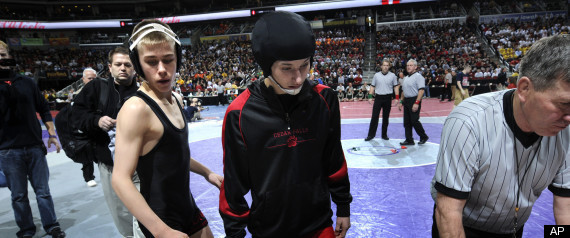
I also quite frankly wonder if talented athletic women should be targeting men's sports. There have been female baseball players before, in the old Negro leagues. Females have competed in the lower classes of high school wrestling, one example being Cassy Herkelman. (She made news when her opponent in the state tournament, Joel Northup, defaulted rather than face her: see below).
Women have competed quite well in ultra-marathons, for example. Perhaps the true way to fulfill the spirit of Title IX is for a woman to one day play shortstop for the Dodgers.

Overall, however, I believe the spirit of Title IX has failed. Forty years is not too short a time to expect a professional women's league in one sport to become moderately successful. Perhaps we are dealing with fundamental tastes of humanity here, and the lack of interest in paying and watching women play sports will not change. What do you think?


Tuesday, May 1, 2012

On Masai Ujiri and True Ubuntu in Denver

The Denver Nuggets find themselves reeling from a Game 1 encounter with Andrew Bynum in which they looked powerless to take on the Lakers star in the middle. Same old Nuggets, you might say, able to make the play-offs but unable to advance past the first round or two. It's been regretfully easy for seasoned NBA fans to patronize Denver as a good but not great team for the last few decades.


However, let me encourage you to rethink your "Same old Denver" thoughts. General Manager Masai Ujiri is attempting to create a new model for how teams sign players, and I hope is successful. Witness these words from Chris Luchey, who is the agent for Wilson Chandler:
"We're ecstatic," Luchey told SI.com. "[The Nuggets] talked about being a young, athletic team, being a team where a lot of guys make good, solid money and there's not this big gap between the minimum guy and a max player. Having guys feel like they're teammates, not the envious-type typical roster, and young guys who had experience."

Quietly, Ujiri envisions a squad where true Ubuntu (interconnectedness) can flourish and teammates aren't separated by envy and dollar signs. This is no idealism, either: with Ujiri's background and contacts in global scouting, he has the skills to consistently sign above-average overseas talent at merely average prices. It's worth noting that Ujiri is the first African-born General Manager. He seems to have a definite vision of what this team will become. Most teams seem to see the mid-priced veteran as an inconvenience or an accessory to a star. Masai instead seems to see them as valuable assets in their own right. He speaks of getting players experience and building for the future in Denver:

"...Young guys, throw them in and go out and play and maybe get your face kicked a little bit but get some experience and then we know who they are. This is a year that we can afford to do that. We didn’t do it in the intention of not making the playoffs. We did it with the intention of big picture, make the team better and that’s kind of how we feel.”"

There's a second dimension to all this that has yet to be mentioned. Denver is known for being a difficult place for away teams to win. This season that hasn't been true (merely .500-ish at home), but at times the high air of Denver has been difficult for away teams. Denver tried to capitalize on this in the past with run-and-gun offense. But now, Denver is building a roster that is nearly two deep at every position, and strong on defense. With plus defenders like Affalo and Chandler, and shot-blockers like McGee and Anderson, Denver has the possibility of creating a unique home court advantage with its deep bench and thin air. It's the equivalent of how some cold-weather football teams specialize in ball-control, and it's rarely seen in basketball. Admittedly, this may all be hoop dreams, and I'm not sure if such a strategy could make Denver a top three team in the West. But give Denver Democracy its due and notice the unique foundation quietly taking place out west.

Friday, April 27, 2012

Dear Sports Blogs, Please Stop Accidentally Enabling Creepers

I was catching up on Kissing Suzy Kolber today when I came across an article by Justin Halpern. He had an amusing hypothetical idea: Suppose Mel Kiper was at a bar and was grading women instead of football players. As part of the article, he grabbed a random photo of some women at the bar from 2007 and talked about each woman in turn. I assumed the ladies were friends of his or somehow in on the joke. No big deal, right? Here's a photo of some "random" guys in a bar from 2007, for example, that Justin might have used had he been gay or a woman*. Who is your first-round draft choice from the photo?

I want to give Justin the benefit of the doubt. Five years ago, grabbing a random photo, it's unlikely that anyone would find out who those ladies were or know those ladies. But, now that we have reverse image search via tineye.com, the ladies in the photo could be tracked down and identified. They did indeed find out that their photo was being used.

Now imagine how sweet it would be to be described like this on the Internet (taken from Justin's story):
"...His/Her slim physique will be able to take the pounding that comes with a one night stand"
"He/she probably won’t be someone who you can immediately insert your penis in to"
"...He/She more than makes up for with his/her willingness to find a penis, and just put it in his/her mouth"

The lady whose blog it was from requested that the photo be taken down, to no avail. So this poor woman is stuck with slutty comments attached to her and her friends, and being easily found by any creep who reads the comment section. I know, the typical reader for sports blogs isn't Michael David Barrett. But what sucks is, why couldn't Justin use a photo of HIS female friends, if this is just a light-hearted joke? I assume he does has some female friends (insert lazy cliche about virginal writers here). If it's all for laughs and giggles, use a photo that you have permission for, or pick on public figures. (Someone in the comment thread suggested the Kardashians, for example). It's not difficult to find other ways to get our jokes in.

I want to emphasize, most sports bloggers I have met in person were great guys. They were funny, dating/married to lovely women, and not at all socially unacceptable. But there are way too many examples of careless bloggers accidentally putting innocent men and women at risk of Internet creepiness.

For example, a sports blog had a photo of a pretty woman to accompany a random story. When I clicked the link to see if it was some celebrity actress I had never heard of, turns out...in two clicks, it led to a high school student in New Jersey's Facebook photo. I'm going to gently assume that the blogger in question doesn't spend his time trolling Facebook for high school girls. (Yes, I checked if he was on her friends list, he wasn't). But by them publishing the photo, he put that 16-year-old girl at risk of being stalked and/or humiliated.

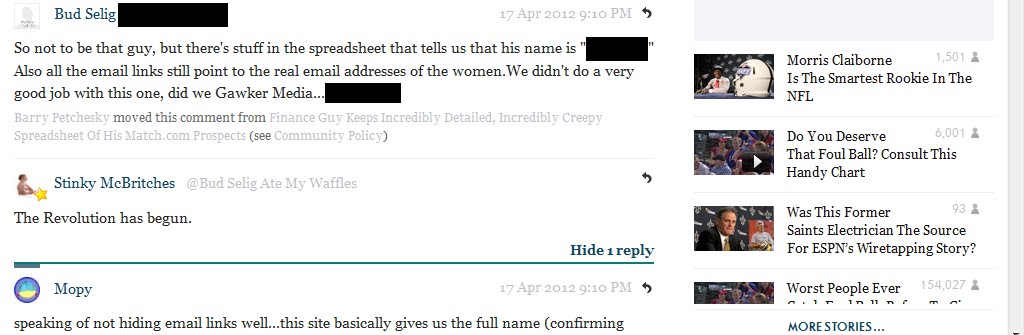
Sports bloggers need to educate themselves about technology in general to stop accidentally giving away their sources and their secrets when it's not necessary. And this isn't just about women. Take, for example, Deadspin's Barry Petchesky, whose writing I enjoy. He wrote up a very funny post about a finance guy who used spreadsheets to keep track of the women he dated. Unfortunately, this happened (click to enlarge):
Barry went back and fixed the spreadsheet and moved the identifying comments out of the thread, but unfortunately the damage had already been done. Obviously, someone at Dave's office (the office we all know about now, via Linkedin) could use this information against Dave. Or, someone could look up the photos of the women and track them down.

Let me state the obvious. I don't think Justin Halpern is a creep who stalks random women on blogs that are five years old. I don't think that the sports blogger who linked to the photo of the high school girl is at risk of a visit from the police. And I don't think Barry Petchsky's mission in life is to enable stalking. I get it: the more raw the story, the more details, the more titillating and exciting. But I'd just remind you what AJ Daulerio said his biggest regret was. He ran a video of a college girl having sex, and ended up getting an email from her father, who had to watch his daughter possibly being raped in a dirty bathroom. In the end, here's what AJ said:
"Daulerio now says he wishes he hadn't run the video. "It wasn't funny," he says. "It was possibly rape. I was trying to kind of put it in that same category [as the Dallas video]. I didn't really look at the thing close enough to realize there's maybe something a little more sinister going on here and a little more disturbing."

Lest you think this is me riding a high horse, here's my own confession of making this type of mistake. When I first started this blog, I used to run a series on here about sports crushes. It was supposed to be a light-hearted look at women who were good people, interesting, and attractive. "Here's this pretty athlete who also works with disabled kids and is in Mensa." A goal was to pick athletes and writers who were obscure. It meant more Google traffic because of less competition. But I too was enabling stalking behavior.

I have to ask myself, what type of person is using Google for more info on "Jane Doe college basketball photos hot?" Do I really want to be enabling that person? Sure, I have good intentions, it's good for traffic, blah blah blah...but at the end of the day, I am guilty of the same. So I recently pulled those posts from the site. This is my admission that I've made this mistake too, and my attempt to fix that. I hope that others give it some thought the next time they write a story on non-famous people. I know that some of you will take this as lengthy needless moralizing. But I truly am concerned that if we're not more careful, some innocent person will get fired, stalked, or harassed. And no writer wants that on their conscience.

*Those are well-known sports bloggers, as you might have guessed.

Tuesday, April 3, 2012

HoopIdea: Giving Credit for Basketball Home Runs and Strikeouts

I wanted to add some baseball-inspired ideas (in honor of opening day) to TrueHoop's interesting project to help make basketball even better. Coined "Hoopidea," they've already had lots of good ideas about improving bad teams and bad defense.

My first idea is regarding blocked shots, similar to baseball's strikeout.
"If a defensive player can block an offensive player's shot so that it does not reach the rim, his team automatically receives possession."
Current situation: While crowd-pleasing, a blocked shot is not valued very much within the game itself. It seems most guards are instructed not to try too hard to block shots, lest they draw a foul. And when a center blocks a shot, the ball merely often goes back to the player who shot it, who now gets a second chance as the center is landing. It would be, as if, a pitcher who strikes out a batter then also had to run home, grab the baseball, and throw the batter out at first for it to count as an out.

Improved situation: This gives defenders an incentive to go for ball on tight last-second plays instead of always holding back to avoid a foul. It also makes a shot-blocker much more vital to his team than before, and increases showy collisions in the paint. It makes it less valuable for, say, a Tyler Hansbrough to throw up a wild shot in the lane in hopes of getting fouled or drawing a charge.

My second idea is regarding fast-break points.
If a team can score before the other team has any players within the circle (or within the key), the basket should be worth three points.

Current situation: Despite the number of great guards in the league, we still fail to see many up-tempo teams. Running teams have had a rather tough twenty years since the Showtime Lakers. During playoffs, teams get more cautious and less likely to run. Thus we get treated to slow playoff basketball with few incentives to run or make more risky passes. Also, steals are less valuable because often a team will hold the ball rather than break for the basket. Basically, a basketball "home run" where the offense makes a hit that none of the defenders can touch should be worth more than a single.

Improved situation: The emphasis on scoring quickly helps balance out the slow-it-down offense so that teams are more willing to play hurry-up on some possessions. Deeper teams, able to run more, are also rewarded with this method. This also can make late-game possessions a little more interesting. A breakaway steal and dunk is now worth 3, not 2, so it's more rewarding to press and gamble rather than lie back in a zone.

Tuesday, November 22, 2011

Crime in a Small Town: State College and a Clash of Narratives

Walk into a bookstore, any bookstore (if Amazon still has left any in your town), and go to the mystery section. Pick up a book, any book. Flip it over. Read the back. See if the words "small town" and "secrets" or "crime" are on the back. I bet you find it in about 10 books or less. The theme is well-known. What usually then happens is the story evolves down two paths.
Path 1: The Hidden Mastermind. The town is terrorized by a hidden mastermind, who delights in tormenting the innocent townspeople. The police are powerless to apprehend him/her, even perhaps seeing them at the scene of the crime but still not able to comprehend that such an icon of the community (or quiet member) is the criminal.

Path 2: The Cover-up. Several people in town know who the criminal is, but the criminal is protected by corrupt small-town politics and judges. Those few who know struggle to turn the tide and get justice, trying to force the town to face the evil within.

A few weeks ago, all we knew is that crime had occurred in State College. A man, Jerry Sandusky, was arrested for horrific crimes against young boys. It was not clear exactly who knew what and when, but it was clear the crimes had been taking place for years without true punishment being carried out.

Over time, public opinion quickly consolidated on The Cover-up explanation. The grand jury recommended that two of Jerry's former bosses be indicted, after all. A wave of outrage led to the school coach and president being ousted. Information emerged to support our choice of The Cover-up. Jerry Sandusky's bizarre interview with Bob Costas made him look like a bumbling fool, the type of dumb criminal who all but wrote "ASK JERRY WHAT HE KNOWS" at the crime scene. Joe Paterno apparently tried to cover up other crimes within the program, or at least limit punishment. We got it right! High-five for Encyclopedia Brown!

Or...did we? Because what I see is that when this story first broke, Path 1 was just as viable. Jerry Sandusky had an airtight alibi. His parents were involved in charity work for children. He started his own charity when he was 33, an age where some of us are still trying to figure out how to be adults, let alone think about children. He had adopted six children of his own. He then subsequently quit football to focus on his charity. There was every reason to see Jerry Sandusky as the type of warped mastermind who could indeed fool everyone. Penn State officials knew Jerry when he was a vibrant, talented young man, not Jerry the tired, slow-witted old pervert (allegedly). Such a Jerry could indeed make one showering incident sound like the warped imagination of a tired, impressionable graduate assistant. Yet that narrative of Jerry Sandusky as Criminal Mastermind never made it into the stories I read. Why not?

In the end, we (writers, commenters, etc.) got it right. I'm pretty sure about that, even given our ability to create new stories to confirm our existing biases and choices. And yet, I still am a bit afraid. I see how quickly we, supposed critical thinkers, settled on one narrative or possibility without even considering the possibility of another. I see the cost if we were wrong, and it concerns me. "We" were right when we flip to the back of the book for the answer...but I don't think it's anything to crow about to Encyclopedia Brown.

Friday, October 14, 2011

Bloggolalia: Is it the "Favre Penis Story" or "Favre Sexual Harassment Story"?

During Blogs with Balls, there was an amusing exchange about Deadspin's predilection for publishing penis photos. I laughed as much as anyone and enjoyed watching some editorial squirming. But in retrospect, there's something not so funny about the entire exchange.

We certainly have some sports blogs that thrive on getting scoops to stories that mainstream media won't print. Like many of you, I question why it matters that a 23 year-old athlete went on a date with a 17 year-old, or that a no-name Division III volleyball player may or may not be the girl in some risque photos. There's certainly plenty of room for criticism.

However, at times sports blogs that publish such stories get too much criticism. Is the Brett Favre-Jenn Sterger story really about publishing photos? Is this really a right-to-privacy story? Or is this more accurately a sexual harassment story that involved abuse of power, attempted adultery, and an age gap that might even make a Hollywood actor think twice? A story where few would take any notice or believe it was true until transcripts and photos were provided?

There seems in some circles to be a steadfast refusal to give sports blogs any credit for publishing such stories. But don't such stories help protect women who work in close contact with athletes? Don't sports blogs, as puny as their power may be, give harassed workers and minor athletes a rare outlet against their often powerful harassers? Especially in situations where local media has been all but bought and paid for by the harassers themselves, such as in smaller college towns or Boston (nice Red Sox coverage lately)?

Yes, I don't expect to see Brooks to be sharing the Nobel Peace Prize in five years, or Daulerio to be receiving certificates of appreciation from NOW. But to balance out some past criticism they've received, the existence of their blogs provides some sort of opportunity for quirky justice. Sometimes sports blogs have gotten it wrong (widespread mistrust of Big Ben's first accuser comes to mind), but other times their existence has helped balance power, just a little bit. It is possible to combine mega-hit blogs with doing the right thing, and I do appreciate the times it has happened. I hope it happens even more often.

Tuesday, September 27, 2011

Too Many Bloggers? Not Enough Bloggers (Video)

While attending the Blogs with Balls conference, I was even more aware how crowded the sports blogosphere is. Panelist after panelist referred to the difficulty of standing out in a crowded market. The room was filled with talent, and I knew many more talented bloggers who were not present. While developments such as the emergence of Grantland validate bloggers, it also signals that bigger, more powerful competition looms. Paradoxically, receiving the very legitimacy bloggers crave could be the end of sports blogging as we know it.

At and since the conference, small fracases have broken out about the need for more female and minority bloggers. There was a early-morning panel at the conference about women in blogging, but I was strangely dissatisfied with it. If I were the head of a blogging network, why would I want to hire a female blogger? In my opinion, I felt the panel missed an opportunity to confront this question head-on. I was also shocked to learn via Punte just how few women had attended previous Blogs with Balls conferences. For a reference point, I tried to coax two NYC female sports bloggers to go to Blogs with Balls 1 a few years ago. Had they attended, if I understand Punte's numbers correctly, the number of female bloggers in attendance would have nearly doubled.

Also, a debate has since broken out about the need for more minority bloggers, spurred by AJ Daulerio's reply to being asked why Deadspin had no black bloggers*. (For more on that, see Bomani Jones's essay). I understand that if you make your living through blogging, it can't be fun to be accused of being racist and/or sexist. But if you will, please watch this short video clip of Deadspin's Emma Carmichael, the first full-time female hire at Deadspin, giving her thoughts on how blogging could be changed:

I think she makes good points on the need for greater interactivity, points that perhaps the traditional male perspective on blogging has missed. The reason we need more bloggers, not less, is there are still many more ways to blog and things to say that we aren't covering. Bloggers who are underrepresented in blogging offer us a chance to rethink and learn from others. There's no inherent magic about being a female or minority, but there is a tendency to bring up a different perspective to blogging that we need. (I've written about that in the past as far back as 2007). This doesn't have to be complicated...right? I personally pledge to do my best to bring at least one new female blogger and one new minority blogger to Blogs With Balls 5, should I attend. And I hope you all will join me in doing so, and that if you have hiring power at a blog network, that you'll consider looking for such bloggers.

*I think it's also fair to point out that AJ did a lot to promote the success of Katie Baker (now at Grantland) and Emma Carmichael (still at Deadspin). I saw him personally getting in arguments on Twitter to defend one of them when other bloggers tried to tell him they weren't good enough. But Bomani and Jemele Hill were also fair to point out the poor track record with attracting minority talent.

Monday, September 26, 2011

Balls Bloggers Juggle: Bloggers Need Partners

After attending the Blogs With Balls conference, I realized just how many skills bloggers need nowadays to be competitive. I was impressed by the talent in the room, but also noticed how much the job of a good blogger has expanded. In the past, bloggers either learned those skills themselves or joined a blog network. Bu some skills are just too important, and bloggers may need to pursue partnerships or hire part-time help. It doesn’t have to be expensive. Bloggers can use college students, trade favors with friends, or even enlist faithful fans of the site. Five potential partnerships follow below.

Business people. Traditionally, sports blogging has been a bit at odds with business. For example, an oft-heard criticism of ESPN used to be that it was too much of a business. However, the conference panels spent a lot of time on topics such as innovation, advertising, platform choice, and branding. I felt that many bloggers could benefit by just sitting down with a business-minded friend for two hours and learning some basics. Or, browse sites/magazines like Fast Company, INC, and others to better understand the business perspective. Thinking of blogging in terms of niche, demographics, networking, and visibility may seem boring. But being able to understand what exactly you offer readers and advertisers, and how to better position your blog in the marketplace, could help your blog grow rapidly. The Big Lead is making strides in this area with their Amare partnership and sponsored posts, but there is so much more to be done.

Graphic designers. In a technology world where tablets and Tumblr continue to grow rapidly, design has become more and more important. As I sit here, I am reading yet another business magazine that is trumpeting the rise of design in the market. Nike and Apple may not have the most durable products (glances mournfully at iPhone screen), but design is their major edge in the market. Deadspin’s use of Jim Cooke as a graphic designer is a clever start in this direction. There is still so much more to be done, though. A panelist in the innovation session all but begged for a fantasy sports site that took design and form seriously. Sports blogs may be losing the Tumblr generation, because most sports blog content does not lend itself easily to the copy-and-paste generation. That should change soon.

Video content producers. Yes, you know all the arguments about not using video in your blog. Your readers are at work, and it’s harder for them to get away with watching a video on their blog rather than reading text. Videos are difficult to produce and edit. You have a face for radio, or for Star Wars re-enactments. Podcasts are easier to produce.

However, look around you at the trends on the web. I felt like the “Blogging is Dead” session was a start in the right direction, but could go much further. I wince a bit as I cite this example, but recall, for example, the visibility Barstool Sports got by partnering with Jenna Marbles. My female friends who would never watch a sports game raved about her viral video in their blogs. We bloggers often find ourselves mocking would-be Youtube sports announcers or mining Youtube to feed the content beast, but what about actually partnering with Youtube? For the most part, bloggers don’t understand video, and I am concerned that this will cost the industry as the field involves. We can all continue to stalk jose3030’s twitter feed during live sports events, and may LSUfreek never stop making animated gifs, but I am surprised that so few bloggers seem to have followed in their footsteps.

Lawyers and subject matter experts. It is not as if they aren’t already jabbering away in your comment sections while racking up billable hours. Day after sports day becomes nothing more than idle chatter about contracts and crime. But what if you would use your lawyer friend on Facebook to occasionally add some educated expert opinion to some of the stories of today? Subject-specific experts is one easy way to garner links and make your story stand out on the hot topic of the day. Not just lawyers could help: fields as diverse as fashion and accountants can make a difference.

Tastemakers and Innovators. How does blogging stay cool? There was a certain buzz around sports blogging in 2005 that drew me to it. I felt that sports blogging was right in line with where the web as a whole as going. Of course, with time blogging has become experienced and lost some of its novelty. But overall, I feel that perhaps bloggers are out of touch with where the web is going. Trust me, I would love to be wrong about this.

But what about trends such as gamification, or freemium business models, or the visual web, or applications for Facebook, Android, and Apple…are we involved in these trends? I think that journalism schools are better training writers about these fields, but I worry that we are behind other fields at the moment. Reading Techcrunch or Gizmodo or even looking at concepts like Threadless and Etsy, I am not so sure that we are influencing what’s cool. In some ways blogging itself may be in crisis, taken over by Facebook and Google Plus. That’s a bigger problem than you or I can solve, but perhaps a good technologist can help your blog better fit into trends.

Tuesday, September 13, 2011

The Problem with Predictionitis (Circular Rant)

A few weeks ago, I took a shot at predicting the value of Terrelle Pryor in the NFL supplemental draft. I put my guess as to what round he would end up with, threw out a lot of half-baked ideas to support it, and plopped my view on the Internet. It was an easy column to write, and it took me about 45 minutes. I wrote it to contest Don Banks' column on Terrelle Pryor, which I'm sure took much longer than mine to write and cited scouts and professionals. Turns out I was right. So what? Does anyone really care?

I would hazard a guess that about 10% of the sports columns written are prediction columns. Fantasy sports "gurus" try to convince us that so-and-so is underrated, overrated, or unrated. Experts project into the future by telling us the exact game score and record of each team, sounding confident as they use statistics and gut feelings. Visionairies tell us about the future of this game or that. It all sounds so good and it's fun to argue about such things. It's also a total waste of time.

The beauty of sports is that it happens live and unscripted (mostly, Tim Donaghy moments excepted). In a DVR and spoiler-full age, sports is one of the few unscripted enjoyments we have. There are no leaks ahead of time, no columnists who truly have the inside scoop. And yet, we waste so much time trying to see into the future that we ruin sports of its present. The fun is in the moment. I find myself more and more turning to Twitter during games to read the fan's reaction as the game happens. The roar of the crowd can't be easily transcribed into a recap column, much less properly anticipated by a confident scribe as he types busily away at his local Starbucks or cubicle. We spend so much time analyzing and prescribing that we can't just let the balls fall where they may.

I have been reading some older sportswriting books, and I'm struck by how often sports columnists admit that most of their fellow writers had lost any sense of joy in the game itself. The game is just something they endure so they can rush back and write their columns about what happened. Have we really come to this, that predicting the game is more fun than the game itself? When was the last time you went back at the end of the year to check how well your favorite columnist predicted games during the preseason? It's an exercise in irrelevance and meaningless chestpounding, without a single useful trait and...

HEY DID I MENTION THAT I WAS RIGHT AND ESTEEMED WRITER DON BANKS FOR SPORTS ILLUSTRATED WAS WRONG?! WHERE'S YOUR SCOUTS WITH THEIR ANONYMOUS WHISPERS NOW, DONNIE BOY? WHO CARES THAT THE RAIDERS WERE THE TEAM TO SPEND THE THIRD ROUND DRAFT PICK. WHO CARES THAT I MADE MY POST BEFORE THE FIVE GAME SUSPENSION WAS ANNOUNCED. SUCK IT, BANKSY! KISS MY SWEATERVEST, BABY!!! WOOOOOOOOO!!!!!!!!!!!!

Um, on second thought, I predict that prediction columns aren't going anywhere.